
Overview
Course Description
This 32-hour training program uses a hands-on approach providing students an in-depth understanding of industrial process measurement & control systems. Participants will learn to apply more comprehensive measurement and control principles, terminology, symbols and documentation standards. In addition, students will perform hands-on exercises in which they will build, test, tune and troubleshoot temperature, pressure, flow & level control systems.
Topical Outline
- Application of ISA documentation standards
- Elements of a Process Control Loop
– PV-Process Variable
– MV-Manipulated Variable
– C-Controller - Other Process Measurements
– Weight
– pH
– Density
– Viscosity
– Moisture
– Others - Process Dynamics
– Open Loop Response
– Process Gain
– Process Time Constant
– Process Dead Time - Control Methods
– Open Loop control (Self- regulating)
– Manual control
– ON/OFF control
– Feedback control
– Feedforward control
– Cascade control - Control Tuning
– Open vs. Closed loop methods
– Stability vs. responsiveness
– ¼ decay ratio
– Simplex tuning method
– Zeigler-Nichols tuning method
– Auto-tuning - Special Cases
– pH control
– Nonlinear systems - Control Valve Selection & Sizing
– Valve types (Globe, Ball, Butterfly & Gate)
– Valve Characteristic (Quick opening, Linear, Equal Percentage)
– Other Control Valve Topics (Positioners, Materials, Configuration, Actuators & Accessories) - Installation Best Practices
– Wiring
– Shielding
– Isolation - Control System Troubleshooting
– Experience Based
– Trial & Error
Prerequisites
PCI-100: Understanding Industrial Process Control/Level One Process Measurement & Control Fundamentals or a fundamental understanding of industrial process measurement, control system design and operation.
Objectives
Persons successfully completing this course will be able to:
- Create the documents used to define instruments and control systems.
- Apply the principles, equipment and techniques for the primary industrial process measurements of temperature, pressure, level and flow.
- Understand process response and how it affects controller operation.
- Know and apply the proper controller tuning method.
- Select and size the proper control valve.
- Build, test, operate tune and troubleshoot a variable feedback control loop.
Other Courses
Discover More Courses
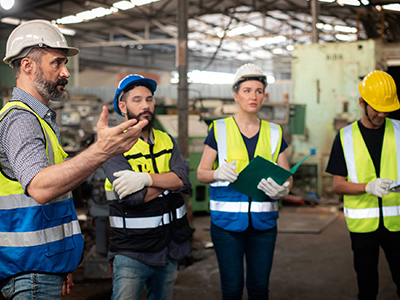
General Industry Courses
Our General Industry courses provide comprehensive, hands-on training across electrical and mechanical maintenance disciplines, including troubleshooting, safety, precision maintenance, and equipment fundamentals. Designed for real-world application, these programs build the skills technicians need to work safely, diagnose issues effectively, and support reliable plant operations. The result is a more capable workforce and stronger overall maintenance performance.
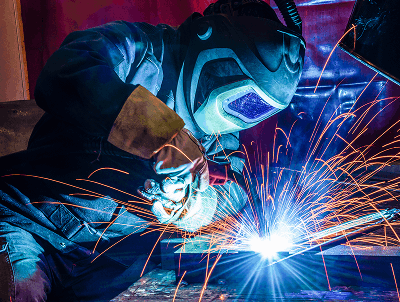
Welding
Our welding courses deliver practical training in maintenance welding, field fabrication, and TIG processes commonly used in industrial environments. Participants develop the skills to perform safe, high-quality repairs and modifications that support equipment reliability and longevity. Each course emphasizes proper technique, setup, and application to ensure consistent, dependable results.
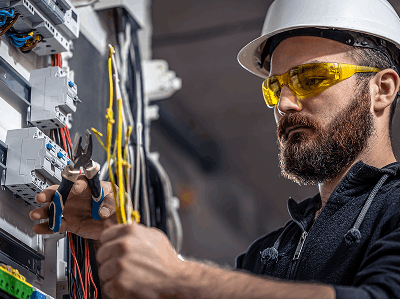
Fluid Power Courses and Consulting Services
Our Fluid Power courses and consulting services develop a strong understanding of pneumatic and hydraulic systems, with a focus on troubleshooting, system performance, and best practices. From foundational concepts to advanced applications, participants gain the skills to diagnose issues and improve system efficiency. These programs support more reliable operation and greater confidence working with critical fluid power systems.
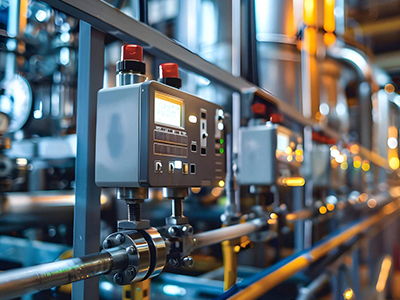
PLC and Drives Courses
Our PLC and Drives courses offer hands-on training across Allen-Bradley platforms, motor controls, communication networks, and variable frequency drive systems. Participants build the skills to program, maintain, and troubleshoot automation systems used in modern industrial operations. The training emphasizes real-world application to support reliable performance and efficient system operation.
Steam Systems
Our Steam Systems course provides practical training in steam generation, boiler operation, and distribution systems used in industrial environments. Participants learn how to operate, maintain, and troubleshoot steam systems with a focus on efficiency, safety, and reliability. The course supports improved system performance and more effective energy use.