
Overview
Course Description
This 24 hour workshop is designed to provide the participant with an introduction to electrical circuits and electrical controls including safety and troubleshooting techniques. This workshop is designed for beginning electricians, equipment operators, mechanics and others who are involved in using or maintaining electrical circuits and controls.
Course Outline
- Safety – safely working with electricity and electrical circuits, safety devices, safely using test equipment, designing safe electrical circuits.
- Understanding Electrical Diagrams and Control Circuits – ladder diagrams, wiring diagrams, electrical print reading, interpretation and design of control circuits.
- Units of Measurement and Identification – Ohm’s law, power calculations, symbols, color codes, wire sizing guidelines, resistance, voltage drops.
- Electrical Switches, Timers and Controls – wiring conventions, switch types, control relays (standard & latching), timer control, ON and OFF timer delays, control and switch troubleshooting.
- Electrical and Control Component Identification – learning to identify and the use of coils, transformers, diodes, fuses, capacitors, filters, bridge rectifiers and other electrical and control components.
- Wiring- wire selection, wire connections, grounding, and wire labeling.
- AC Motor Control – 1-phase and 3-phase motor types and identification, speed control, braking circuits, motor selection and applications, wiring, finding open and short circuits, basic and advanced troubleshooting techniques.
- DC Motor Control – DC motor types and identification, speed control, applications, finding open and short circuits, basic and advanced troubleshooting techniques.
- Field Devices – identifying, implementing and maintaining limit switches, photoelectric switches, proximity switches, flow switches, level switches and sensors, temperature sensors. Implementing, troubleshooting and maintaining solenoid valves and solenoid valve circuits.
- Troubleshooting Control Circuits – maintenance schedules, static and dynamic inspections, preventive maintenance, maintenance considerations in circuit design, troubleshooting at the power source and the control circuit, identifying faulty components and circuits, and proper use of troubleshooting tools.
Objectives
At the completion of this workshop, participants will be able to read electrical diagrams and prints, identify and describe the function of components in an electrical system, demonstrate safe work habits, demonstrate the ability to design a safe electrical circuit using various components and be able to troubleshoot problems in electrical circuits.
Other Courses
Discover More Courses
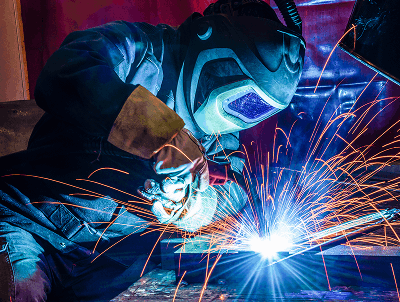
Welding
Our welding courses deliver practical training in maintenance welding, field fabrication, and TIG processes commonly used in industrial environments. Participants develop the skills to perform safe, high-quality repairs and modifications that support equipment reliability and longevity. Each course emphasizes proper technique, setup, and application to ensure consistent, dependable results.
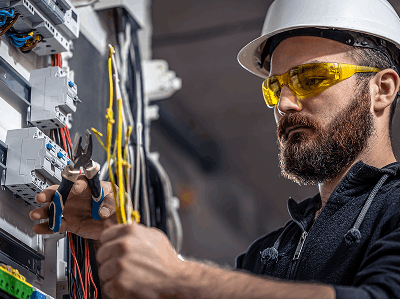
Fluid Power Courses and Consulting Services
Our Fluid Power courses and consulting services develop a strong understanding of pneumatic and hydraulic systems, with a focus on troubleshooting, system performance, and best practices. From foundational concepts to advanced applications, participants gain the skills to diagnose issues and improve system efficiency. These programs support more reliable operation and greater confidence working with critical fluid power systems.

Instrumentation & Process Control
Our Instrumentation & Process Control courses provide practical training in how industrial processes are measured, monitored, and controlled. Covering both foundational and advanced topics, participants learn to work with instrumentation, interpret process data, and troubleshoot control systems. This training supports improved process stability, efficiency, and overall system performance.
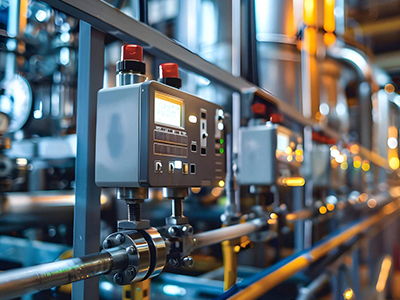
PLC and Drives Courses
Our PLC and Drives courses offer hands-on training across Allen-Bradley platforms, motor controls, communication networks, and variable frequency drive systems. Participants build the skills to program, maintain, and troubleshoot automation systems used in modern industrial operations. The training emphasizes real-world application to support reliable performance and efficient system operation.
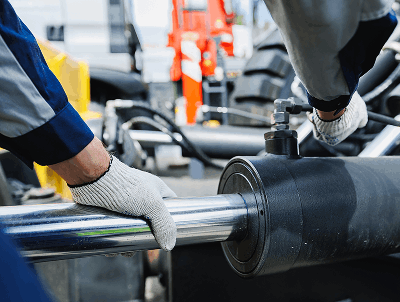
Steam Systems
Our Steam Systems course provides practical training in steam generation, boiler operation, and distribution systems used in industrial environments. Participants learn how to operate, maintain, and troubleshoot steam systems with a focus on efficiency, safety, and reliability. The course supports improved system performance and more effective energy use.