
Overview
Course Description
This workshop covers mechanical drives operation, selection, installation, and maintenance. It provides the methods to properly install and maintain all major types of belts, roller chain, and coupling drives. Measurement and inspection techniques are also covered in detail. Basic bearing installation and maintenance is also covered with an emphasis on setting clearances for spherical roller bearings.
Objectives
Participants successfully completing this course will be able to:
- Describe safety guidelines and OSHA requirements for mechanical drives
- Add and subtract decimals and fractions
- Convert fractions to decimals and decimals to fractions
- Properly measure various dimensions using micrometers, calipers, indicators, and machinist levels
- Identify various fastener grades and demonstrate proper torqueing techniques
- Identify various belts, sheaves, roller chain, and sprockets
- Perform belt and chain drive ratio calculations on single and multiple drives
- Align belt and chain drives using straightedge and precision alignment techniques
- Install various types of shaft couplings
- Perform rim and face coupling alignment
- Perform reverse dial indicator alignment
- Describe various bearing installation procedures
- Describe various types of lubricants and their properties
- Install spherical roller bearings and properly set clearances
Course Outline
- Safety
- Shop Math – Fractions and Decimals
- Precision Measurement – Micrometers, Calipers, Indicators, and Machinists Level
- Fasteners and Torque
- Belt Types and Identification
- Belt Numbering Systems
- Belt Length Calculations
- Belt Drive Ratio Calculations
- Safety and Guarding Design
- Pulleys and Sheaves Inspection
- Pulley and Sheave Installation
- Roller Chain Types, Size, and Identification
- Sprocket Types and Identification
- Chain Drive Ratio Calculations
- Chain Lubrication
- Troubleshooting Chain Failures
- Belt and Chain Alignment and Tensioning – Rough Alignment and Precision Alignment
- Drives with Multiple Speed Reductions
- Types of Couplings and Alignment Requirements
- Elastomeric Couplings
- Jaw Couplings
- Chain Couplings
- Grid Couplings
- Coupling Alignment Methods
- Run-out, End Play, and Soft Foot Checks and Corrections
- Straightedge and feeler gauge alignment methods
- Rim and Face and Reverse Dial Alignment
- TIR and Validity Rule
- Shim Formula
Other Courses
Discover More Courses
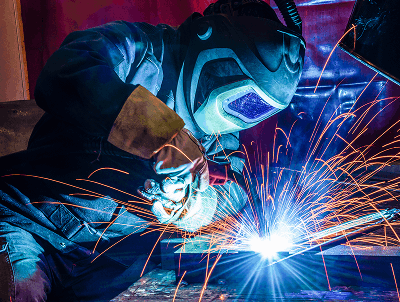
Welding
Our welding courses deliver practical training in maintenance welding, field fabrication, and TIG processes commonly used in industrial environments. Participants develop the skills to perform safe, high-quality repairs and modifications that support equipment reliability and longevity. Each course emphasizes proper technique, setup, and application to ensure consistent, dependable results.
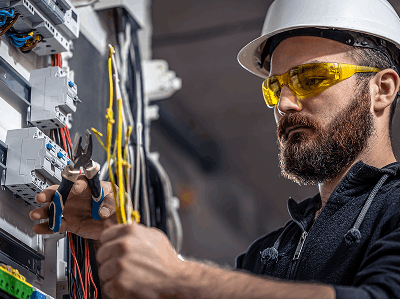
Fluid Power Courses and Consulting Services
Our Fluid Power courses and consulting services develop a strong understanding of pneumatic and hydraulic systems, with a focus on troubleshooting, system performance, and best practices. From foundational concepts to advanced applications, participants gain the skills to diagnose issues and improve system efficiency. These programs support more reliable operation and greater confidence working with critical fluid power systems.

Instrumentation & Process Control
Our Instrumentation & Process Control courses provide practical training in how industrial processes are measured, monitored, and controlled. Covering both foundational and advanced topics, participants learn to work with instrumentation, interpret process data, and troubleshoot control systems. This training supports improved process stability, efficiency, and overall system performance.
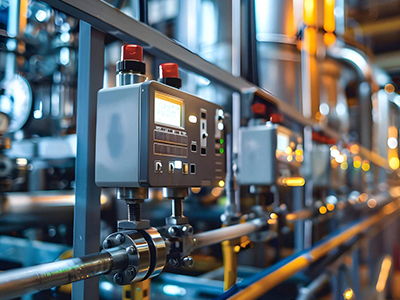
PLC and Drives Courses
Our PLC and Drives courses offer hands-on training across Allen-Bradley platforms, motor controls, communication networks, and variable frequency drive systems. Participants build the skills to program, maintain, and troubleshoot automation systems used in modern industrial operations. The training emphasizes real-world application to support reliable performance and efficient system operation.
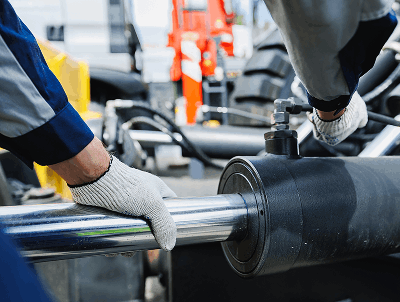
Steam Systems
Our Steam Systems course provides practical training in steam generation, boiler operation, and distribution systems used in industrial environments. Participants learn how to operate, maintain, and troubleshoot steam systems with a focus on efficiency, safety, and reliability. The course supports improved system performance and more effective energy use.